By Master Milad
The short answer
- No. For most kids, patterns aren’t boring. They’re hard, and hard feels boring when you’re not good at it yet.
- A few minutes of practice at home flips it.
- Kids like what they’re good at.
- Your first class with us is free. Book it
It’s not boring. It’s hard.
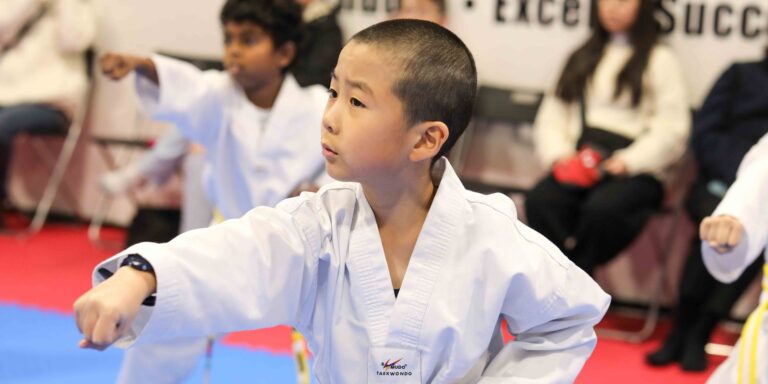
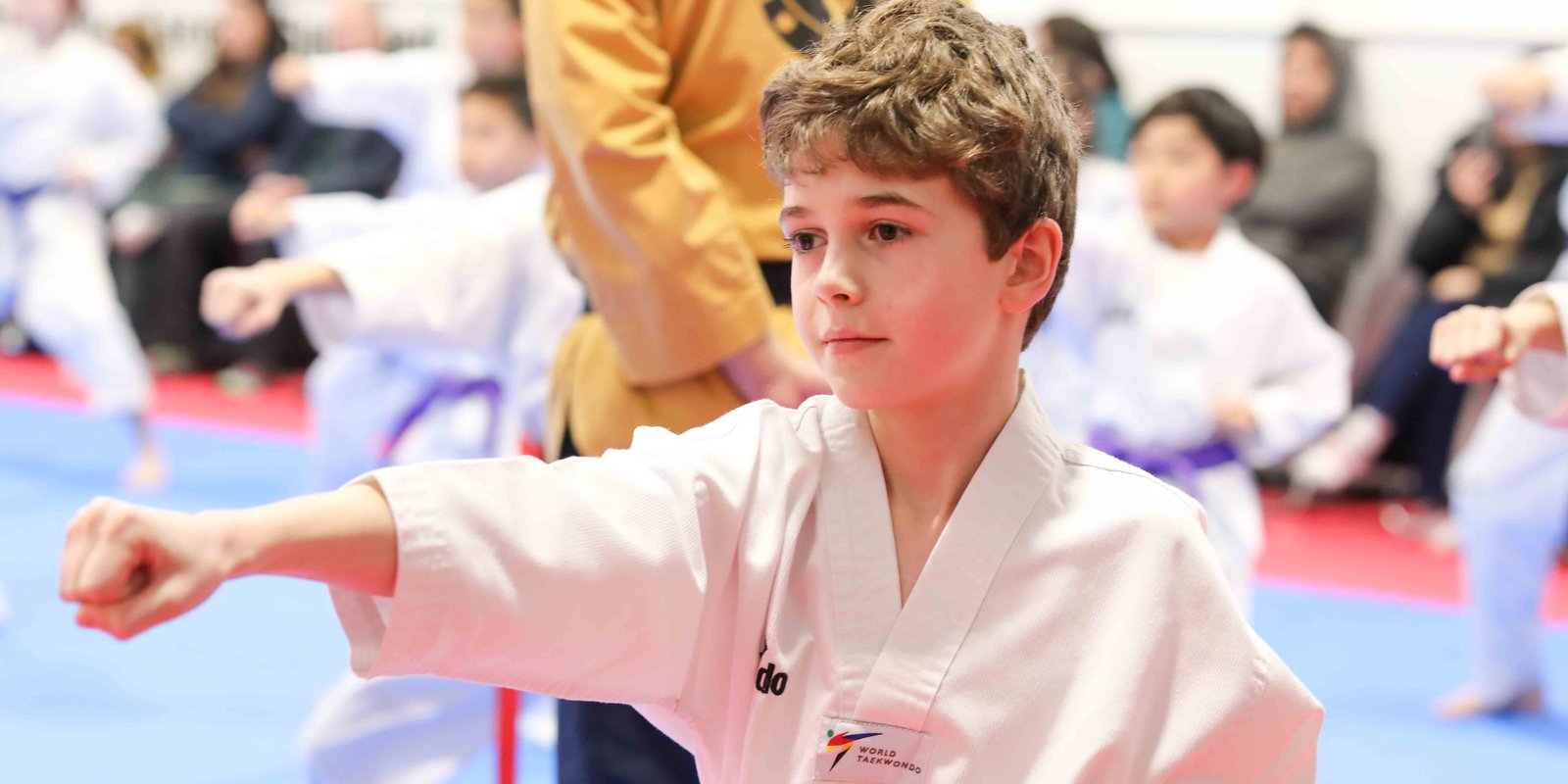
Patterns (poomsae, in Korean) are set routines of blocks, strikes, kicks and stances, done in the same order every time. For a lot of kids, they’re the least favourite part of class and the part of a belt test that makes them most nervous.
Here’s why. Patterns are a different pace from kicking drills and games: slower, more exact, more to remember. That change of tempo is good for kids. It works a different part of the brain. But it’s uncomfortable at first.
And most people find patterns harder than other parts of taekwondo. A few kids pick them up right away. That’s just how their brains work, the same way some kids are naturally fast or flexible. Everyone has different strengths. But if your kid struggles with patterns, they’re in the majority, not the minority.
It gets easier after a few tests. Then it gets harder again around green belt, when the patterns get longer and trickier. That’s normal too.
Not a natural? Most kids aren’t.
Plenty of kids aren’t natural at patterns. The ones who get good do the same thing: after every belt test, they go home and start learning the next one. They want to show up to the next class a little more prepared. Some even pick up the next pattern early, just by watching the older students.
I’ve seen plenty of kids fail a test because of their patterns. The ones who build a habit of practice almost never let it happen twice. For a lot of them, patterns end up being their best event.
Here’s what I tell my students so it doesn’t happen to them.
How to help at home
1. Get a head start on the first four moves. Your kid gets a new belt, and with it a new pattern, before their next class. Watch a video of it together and try to learn just the first four movements. That’s a huge win, and they’ll walk into class ahead. Start here: this is our white belt pattern, the “I” Pattern, filmed at our school. Every pattern after it, belt by belt, is in our patterns playlist on YouTube.
2. Bite-sized pieces. Don’t add four new moves at once. Add one or two, then repeat. Yes, it’s repetitive. That’s how it works.
3. Good reps only. The way you prepare is the way you perform. If your kid practises with good posture, sharp snaps and a loud yell, that’s what shows up at the test. If they practise at half effort, that shows up too. Patterns live in muscle memory, and muscle memory copies whatever you feed it.
4. Know it without thinking. Thinking through the moves in class is fine while you’re learning. By test day, the goal is not to need to. Researchers call this the autonomous stage of learning, when a skill runs on its own (Fitts and Posner, 1967). Test days and tournaments come with adrenaline, and that’s much easier to handle when the body already knows the way.
What great patterns actually look like
Relaxed, then tense. Tensing your face, shoulders and arms the whole way through burns energy and slows you down. Good patterns stay relaxed until the moment of impact, then snap tight. Relaxed is fast. Fast is powerful.
They teach principles, not street moves. Patterns aren’t self-defence moves, exactly. Nobody throws a down block in real life. But every move is a variation of real principles: balance, distance, angles, targets. Look at the stances, from crane stance (the narrowest) through tiger, walking, back, sitting and front stance. Each one sets a different distance and base. Most intermediate and advanced taekwondo is built from those basics, combined in new ways.
They’re about balance. Miyamoto Musashi, Japan’s most famous swordsman, was also a painter and calligrapher. The warrior with the brush. Patterns are taekwondo’s version of that: the quiet, precise side that balances the explosive side.
The fix: more reps, better reps
A class or two a week usually isn’t enough to get good at patterns. The kids who practise at home get there first, and that’s when patterns stop feeling boring.
For kids who want to go further, there’s our competition patterns program. Here’s what competition patterns do for kids. Your child joins once an instructor says they’re ready.

About the author. Master Milad Bahrami opened Endurance in Port Moody in 2014, and today it’s three schools: Port Moody, Burnaby and Port Coquitlam. Read his story
Tap if this one landed.