
By Master Milad
Yes, the boards are real. And the day I couldn’t break one taught me more than every board I’ve ever broken.
The day I couldn’t break the board
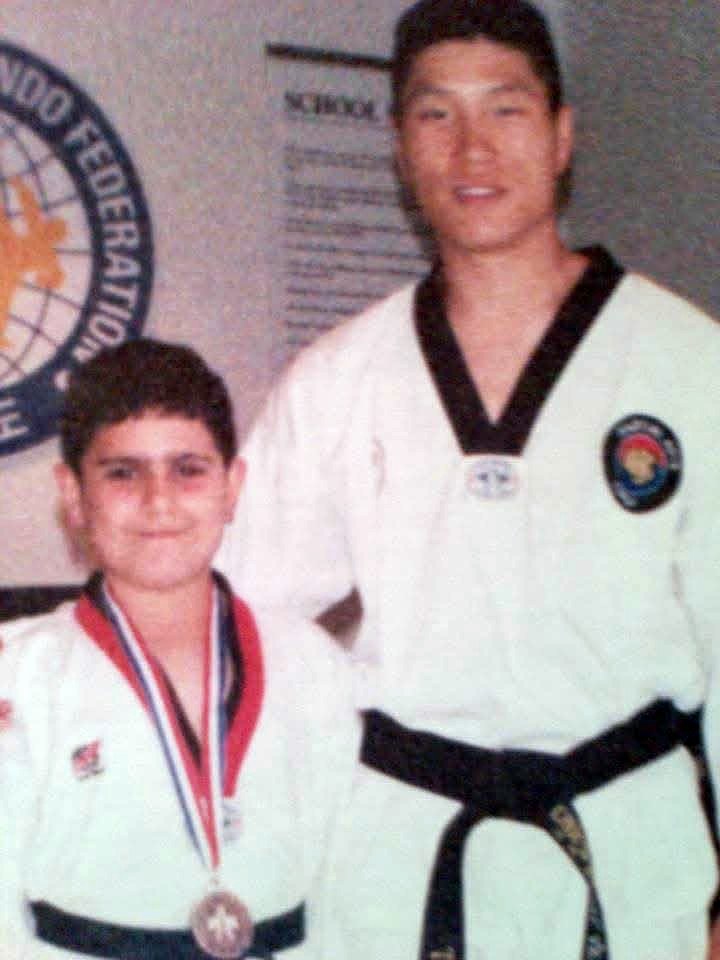
I flew through my first belts. Then came my blue belt test.
My head had gotten a little big. I thought past success meant future success, so I stopped training as hard. I missed classes. I didn’t practise at home. At the end of the test came the board break: a jumping flying side kick over a person. I tried again and again. The board didn’t break, and I failed the test. Honestly, I deserved to.
The next week I didn’t want to go back. My mom didn’t give me a choice. “Get up. You’re going to taekwondo.” So I went. My instructors worked with me, I retested and I passed.
I promised myself I’d never feel that way again, and the only way to make sure of it was to practise. Here’s what I took from it: when the training is easy, the real moment is hard. When the training is hard, the real moment gets easier.
Breaking used to be my least favourite part of taekwondo. Now it’s my favourite.
It’s as much mental as physical
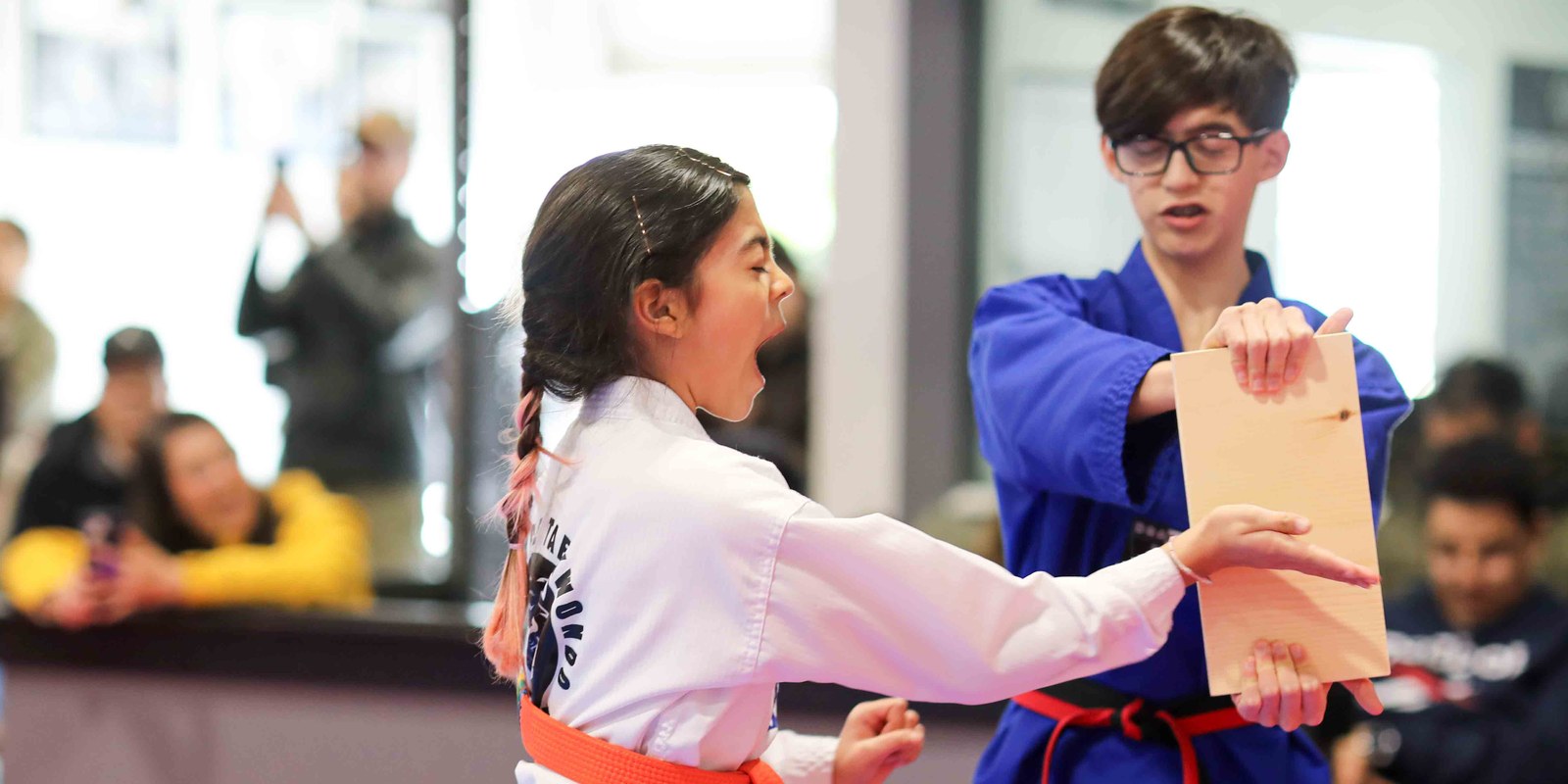
A board doesn’t care how strong you are. It cares whether you commit. Kids who hesitate hit softer, and soft hits don’t break boards. So every break is a small decision: am I all in?
That’s why we’re careful about which board a child gets. We never hold a board we think is too much for them. Every board has a reason. Sometimes it’s a challenge, sometimes it’s to build confidence. Sometimes we let a kid choose between an easier board and a harder one, and we love it when they pick the hard one. The instructor still makes the final call.
At birthday parties, kids break thin demo boards that snap easily. At belt tests, it’s the real thing.
How we practise: boards that break again and again
In class, students use plastic rebreakable boards. They snap apart and clip back together, and they’re colour-coded by difficulty, from white up to black. Kids can break them over and over, which is how they learn to hit right before they ever face a wooden board at a test.
The three keys to a clean break
- Accuracy. Hit the middle. The more accurate you are, the less force you need. Accuracy is the cheat code.
- Speed. Accelerate fast, straight through the board.
- Strength. It’s timing, not muscle. Stay relaxed, tense at impact, and follow through.
Put those together with good technique and you get a break that looks easy. It isn’t. It’s practised.
Every break, step by step
- Set up in a strong stance.
- Measure up. A few slow practice reps to get the distance, height and timing right.
- Shout before you go. It tells the holders you’re coming, so they can brace.
Then commit, and shout again on impact.
Holding the board matters as much as breaking it. A good holder stands in a strong front stance with elbows locked, wrists bent back and fingers curled in. They relax, then brace the moment the breaker shouts. A wobbly hold makes a good kick fail.
What if they don’t break it?
That’s OK. It happened to me. Stay composed, listen to your instructor’s tips, and go through the motions again. It always comes back to the same things: technique, accuracy, speed, strength and a shout on impact.
And whether the board breaks or not, you bow in properly and you bow out properly.
Where breaking goes
Every basic technique can break a board, then the intermediate ones. Advanced students move on to acrobatic breaks, like flying and spinning kicks, and to power breaks, with stacks of boards. Some masters break concrete. I’ve broken a few slabs myself.
The first board is the best one
Every black belt remembers their first break. Your child’s first class, Taekwondo 101, is free.

About the author. Master Milad Bahrami started Taekwondo at nine, in 1997. He opened Endurance in Port Moody in 2014, and today it’s three schools: Port Moody, Burnaby and Port Coquitlam. Read his story